
Vacaville City Directory Holdings
The deepest historical shelf sits with the Vacaville Heritage Council, known as VHC. Founded in 1968, the council works from the 1907 Old Town Hall. The address is 618 East Main Street. Its Vacaville archive reports 5,850 resources. Filters let you narrow a search by keyword, photo, newspaper, document, map, video, audio, gallery, date, geography, and advanced criteria. The advanced option opens the door to finer results.
| Collection | Years or extent | Publisher or maker | Where held | Access |
|---|---|---|---|---|
| Smythe City and Rural Directory of Vacaville | May 1950 | Smythe | VHC item 7021 | Public catalog item; inspect pages manually |
| Vacaville Reporter | 1883 to 1946 | Vacaville Reporter | VHC archive and Solano County Library digital page | Digitized and OCR searchable |
| Vacaville High Ulatis yearbooks | 61 items; visible examples from 1918 to 1951 and later | Vacaville High | VHC collections index | Browse visible items; no continuous run inferred |
| Armijo, Alamo Elementary, and Willis Jepson Middle yearbooks | 110, 25, and 31 items | School publications | VHC collections index | Public index; item availability varies |
| Ancestry Library Edition | Holdings vary | Ancestry | Solano County Library | In-library access only |
| Federal census | 1790 to 1950 public under the 72-year rule | U.S. Census and NARA | NARA and library databases | 1960 census due in 2032 |
| Obituary and newspaper request | Exact-date search with a two-week window | Solano County Library | Cultural Center and Town Square workflow | Emailed PDF free; prints $0.20 per page |
Printed directories beyond Smythe are harder to pin down. The archive lists no continuous Polk series, annual run, or reverse directory. Ask the Vacaville custodian about unlisted volumes. The VHC resource archive is still the best first shelf, since it joins directories to maps, yearbooks, photographs, and local documents.
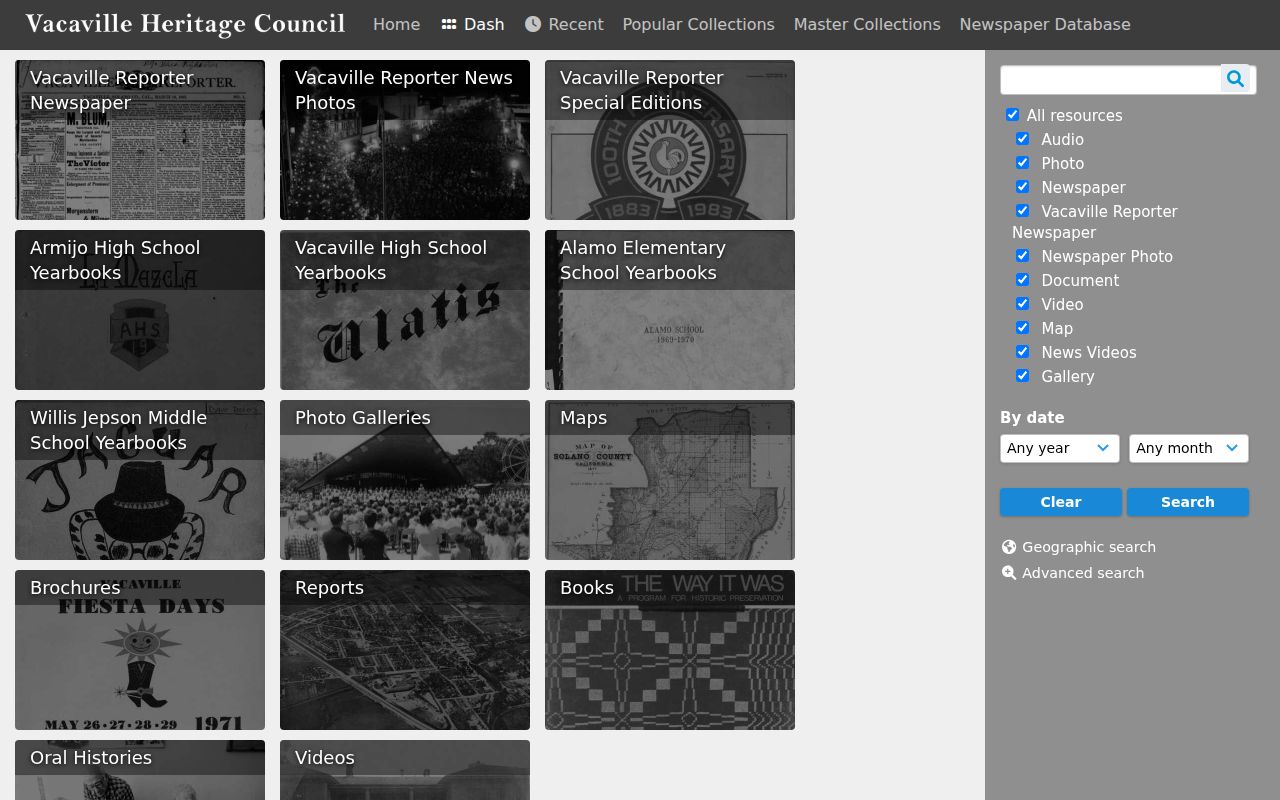
Narrow the search before you visit. Use the filters to trim a Vacaville query down to likely matches, then reach the council directly at (707) 447-0518 or vacavilleheritagecouncil@gmail.com.
Reading a Vacaville City Directory
The May 1950 Smythe catalog entry gives a Vacaville researcher a solid starting point. It names the compiler, the publication date, and the section headings. What a catalog entry cannot do is show the page text itself. A careful transcription of this city directory should therefore split into two lists. One list covers what the catalog proves. The other covers what the pages may reveal once someone opens the volume by hand and reads the street-by-street entries.
| Collection and date | Smythe City and Rural Directory of Vacaville, May 1950, item 7021. |
|---|---|
| Name, phone, and placement | The catalog confirms name, telephone, address, and list placement as the fields to verify manually. |
| Occupation | Not verified from the exposed page text. Do not assign one from a catalog record. |
| Spouse or family notation | Not verified from the exposed page text. Treat any such mark as a page-level finding. |
| Owner or renter mark | Not verified from the exposed page text. Do not infer tenure from the catalog. |
| Abbreviation key | Not exposed in the unattended viewer. Read the volume’s own key before expanding short forms. |
Three directory terms are worth knowing before a manual review of the Smythe volume. None counts as a confirmed feature until the pages are opened:
- Criss-cross directory
- An address-order counterpart used to move from a known street and number toward a listed name. Smythe’s catalog confirms maps and resident sections, not a separate criss-cross section.
- Householder index
- A name or address aid centered on the principal listed resident. Its presence and exact meaning in Vacaville require Vacaville page inspection.
- Abbreviation key
- The volume’s own explanation of short forms. Photograph or transcribe it before interpreting any compact entry.
Vacaville City Directory and Reporter Archive
The past residents of Vacaville have another rich historical aid. It is the Vacaville Reporter. The digitized run spans 1883 through 1946 and carries OCR text for searching. You can reach it two ways. One is the VHC Reporter archive. The other is the Solano County Library digital library. A search there can surface civic notices, weddings, businesses, deaths, moves, and public events. It is not a household list, though. A city directory fills that role. OCR on old Vacaville newspaper pages misreads initials, punctuation, spacing, and names. So stay flexible. Try a surname alone, then initials, then alternate hyphenation, then browse by date. When a hit looks strong, open the page image and read around it. The Historic Vacaville Reporter archive keeps the newspaper in its original Vacaville setting.
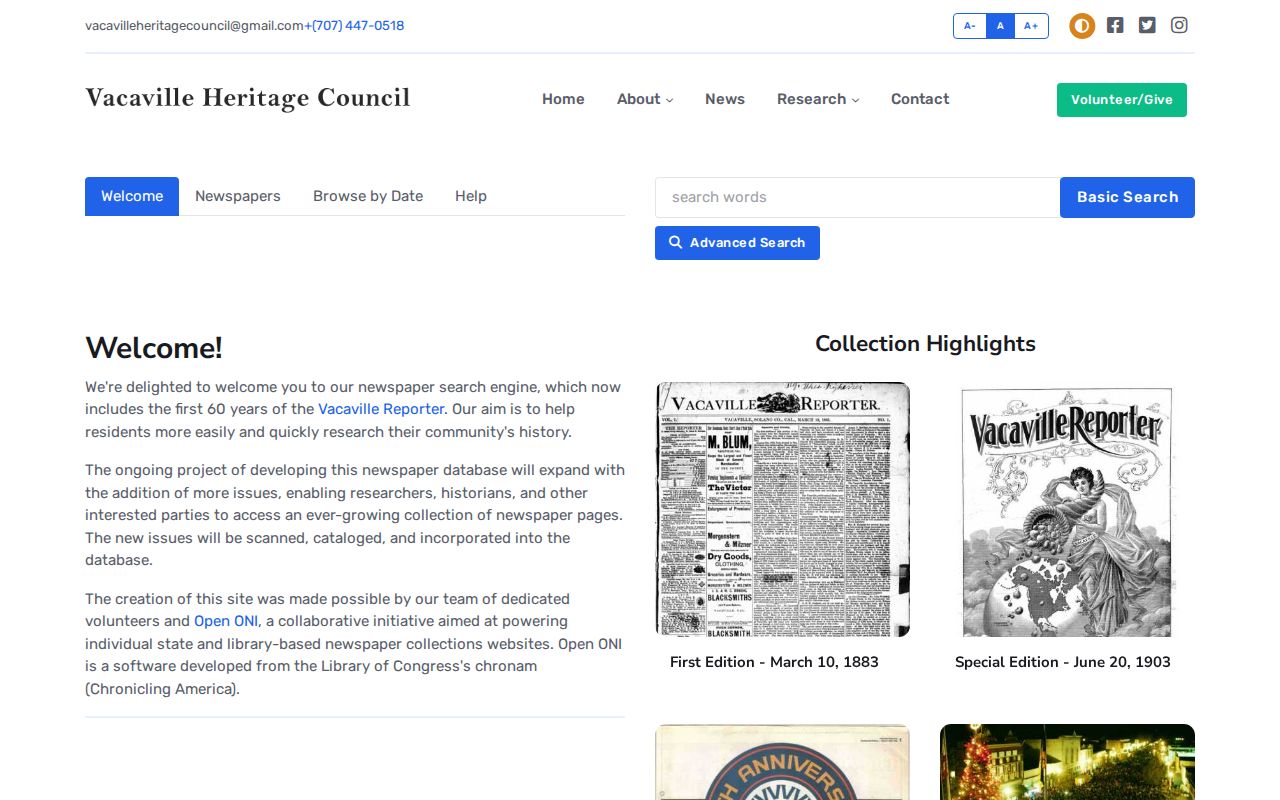
Treat a newspaper hit as a lead, not a conclusion. Use it to suggest a date or a family relationship, then cross-check against the city directory, a census schedule, or a recorded family event. One caution applies here. An 1898 Reporter page lists public officials under a County Directory heading, but that civic roster is not a household directory and should never stand in for one.
The May 1950 Vacaville City Directory
A Smythe City and Rural Directory of Vacaville dated May 1950 survives at the Heritage Council. It is cataloged as VHC item 7021. The catalog entry names its compiler and publisher. Its contents ran wide for a town of that era: History of Vacaville, a Personal Telephone List, City Residents, a Rural Map, a Map of Vacaville, an Elmira List, Rural Route, an Organizations Directory, and a Church Directory. That range reaches past a simple resident lookup. It pulls in rural and community material alongside the town list. The Vacaville VHC catalog entry for the May 1950 Smythe directory anchors the whole volume. It is where a lookup should begin.
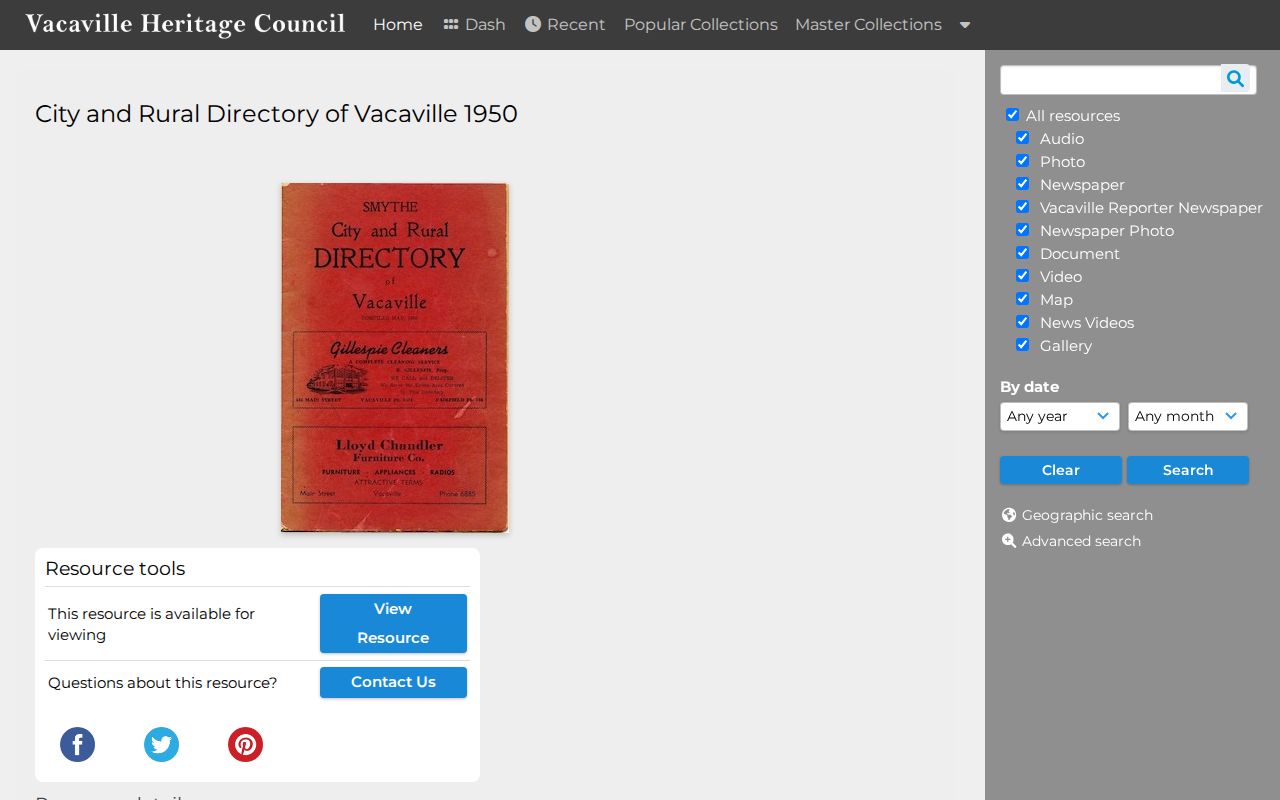
The catalog's reach went past city addresses. Elmira and rural routes appear too, which helps Vacaville families with farm or route ties outside town. Still, it confirms no page entries, no explanatory key, and no continuous series.
Note: No exhaustive printed directory run beyond the verified Smythe item was located, so Polk years remain unconfirmed.
Vacaville Yearbooks and Directory Clues
When a name in a Vacaville directory is common, school publications can separate the candidates. The VHC index holds 61 Vacaville High Ulatis yearbooks. Visible examples span 1918 to 1920, 1938, 1941, and 1943 to 1947. More examples cover 1950 to 1951 and later years. Those examples fall short of a continuous run. VHC also indexes 110 Armijo items and 25 for Alamo Elementary. Another 31 belong to Willis Jepson Middle.
Other shelves add place and event color rather than directory entries. Nut Tree material counts 279 items. Fiesta Days holds 530 and the Allen Collection 663. Reporter newspaper material counts 197. Reporter photos add 60. Together they frame a family's Vacaville world in a given era. The Vacaville Heritage Council collection entry opens the door to these school and community holdings.
A yearbook can pin down a cohort, club, team, or class year. It cannot supply a later address, and Ancestry Library Edition works in-library only.
Vacaville Library Directory Help
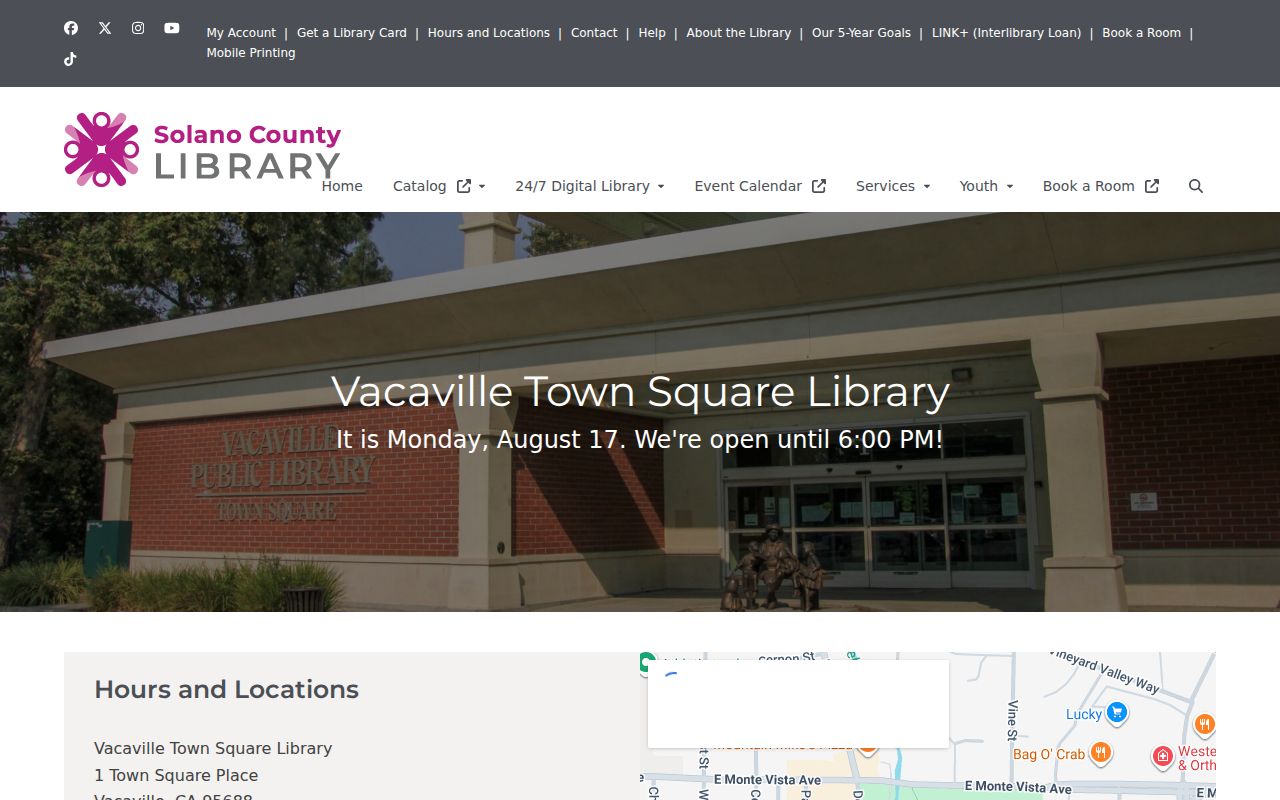
For newspaper and obituary digging, the Solano County Library offers a personal touch. A Vacaville residents directory cannot match that. The Vacaville Cultural Center branch at 1020 Ulatis Drive takes requests for the Vacaville area. The Town Square branch keeps a microfilm reader on hand. Staff ask for plenty of detail on their request form. They want your name, email, phone, and address. They also need the event type, its date, the names involved, and the city or location. Add anything else that might help. The Town Square Library branch information points to the local equipment for microfilm work.
Precision matters here. Vacaville library staff need an exact event date. They will search a window of up to two weeks around it. A vague guess will not get far. The service itself is generous. The search is free, the emailed PDF is free, and printed pages run $0.20 each. The Vacaville library obituary and newspaper request page lays out the form behind each focused search.

A dated notice from this route can fill a gap in a city directory or resident lookup. Treat the obituary as one clue among property rolls, voter rolls, and other records, though, not as a full roster of past residents of Vacaville.
Note: An emailed PDF is free only when the library can search the exact event date supplied on the request.
Vacaville Census Pairings for Directory Research
Think of the federal census as a partner to the Vacaville residents directory. It is not a substitute. Census schedules through 1950 are open under the 72-year rule, and 1960 arrives in 2032. That means a 1950 directory entry can be checked against the household schedule, ages, neighbors, and relationships on the same page. Neither source is complete on its own.
Begin with the alphabetical City Residents section. Then try Elmira and the Rural Route listings. Copy the name letter for letter, initials and spacing included. Note where the catalog places the telephone or location. Map it against the Vacaville street directory plate. A Reporter item, a yearbook, or the public 1950 census can confirm the match. A deed, probate file, or obituary gives the trail an endpoint.
A historical name sometimes needs a present-day identity check. The Vacaville resident lookup helps separate an old directory clue from a current record claim.
Note: The 72-year rule opens census schedules by release date, but it does not convert them into a directory or prove residence.
Tracing a Vacaville Household by Directory Year
Every Vacaville source works best with one job. A residents directory entry gives a dated listing. A census gives a household snapshot. A newspaper records an event, while a deed or probate file supplies the legal link. Follow that order, and resist the urge to fill a gap with a guess. Cross-checking beats assuming in Vacaville family history.
- Find the first plausible name in City Residents, Elmira, or Rural Route and record the exact spelling and placement.
- Check the catalog maps and any visible page text, keeping phone or location details separate from interpretation.
- Search Vacaville Reporter OCR by initials, name variants, and date, then inspect the scanned page around a useful result.
- Pair the directory with the 1950 census, adjacent households, and a yearbook when a school cohort fits.
- Close the trail with an obituary, probate record, or deed, while preserving the date and custodian for each claim.
A vanished name has many innocent explanations. The person may have moved. They may have died, gone unlisted, or fallen into a collection gap. Initials, spouse names, hyphens, spacing variants, and OCR errors all hide matches. "Not found" means only that one searched volume, date, or index came up empty.
Vacaville's Record-Keeping Story
Local history explains why one volume never covers the whole shelf. Vacaville land was first recorded in 1851. The city incorporated in 1892. Fires in 1887 and 1895, plus the 1892 earthquake, scramble business and address continuity downtown. Nothing proves county record books were destroyed. So cross-check instead of claiming record loss in any residents directory trail.
1883 to 1946: The digitized, OCR-indexed Vacaville Reporter collection supplies dated community notices.
1892: Vacaville incorporated. The earthquake that year adds a caution for reading old addresses.
1907: The reinforced-concrete Old Town Hall opened for civic use. It now houses VHC.
May 1950: The Smythe City and Rural Directory stands as the verified printed directory item.
Fairfield holds the Solano County seat. County custody of Vacaville records can therefore sit outside the city. The California State Archives keeps selected Solano naturalization, probate, and map materials. County historical holdings add microfilm and volunteer-organized records. Neither source offers an exhaustive Vacaville city directory run.
For county context, consult Solano County's history page. Also see the California State Archives collections guide.
Note: County custody in Fairfield and selected archive holdings make the holding office part of every Vacaville historical search.
Limits of the Vacaville Directory Trail
A residents directory can place a name in a list. It cannot answer every family question alone. The Vacaville Smythe item confirms its date, compiler, and section names. It still demands hand verification of name, telephone, address, and placement. Occupation, spouse, owner or renter marks, and the abbreviation key are not verified there.
Judge each Vacaville source by what it can show. A yearbook builds a cohort. A newspaper fixes a dated event, and a census captures one household on enumeration day. A residents directory entry gives a name and location in its list. Deeds and probate files add legal and estate links. When records disagree, keep both transcriptions. Check the page image, and ask the holding records office.
Lawful use. Vacaville directory research is appropriate for family history, classmate reconnection, estate work, and civic study. Do not use names, addresses, or archive clues to stalk, harass, or harm another person.
The Vacaville historical shelf serves best when its limits stay visible. A verified catalog, a dated page image, and one independent second source build a stronger record trail than any broad claim about everyone in town.